Mystery Spike in Your Water Bill? Finding a Hidden Leak
November 20, 2026
Why Leaks Stay Hidden Longer in Our Area
A few conditions in our area make hidden leaks both more common and harder to spot than the national average. The water here runs hard, carrying enough dissolved mineral to scale the inside of pipes and chew at brass fittings and valve seats. Over ten to fifteen years that buildup thins a fitting to the point where it weeps under normal pressure. Our winters bring sharp freeze and thaw cycles, and any line in an exterior wall, crawl space, or unheated garage takes that stress every cold snap until a seam finally splits. The clay soil under many homes swells when wet and shrinks when dry, and that constant movement flexes supply and drain lines under slabs until a joint pulls apart. The dry air works against you too. Low humidity evaporates surface moisture quickly, so the puddle that would tip off a homeowner in a humid climate never forms here, and the leak keeps running behind the wall while the floor stays dry.
Who to Call: Your Plumber or Your Water Utility
Two calls solve two different problems. Knowing which one to make first saves you a wasted trip.
Your water utility handles supply-side issues
If a change in cloudiness, taste, or smell shows up suddenly and hits your whole neighborhood, the cause is likely upstream of your home, at the treatment plant or in the main distribution lines. Your local utility can confirm whether recent flushing, main repairs, or seasonal treatment changes explain what you're noticing, and whether it's expected to resolve on its own.
A plumber handles what's happening inside your home
If the problem is isolated to your house, one fixture, or your hot water only, the cause is more likely inside your own plumbing system — an aging water heater anode, deteriorating pipe, or sediment building up in a specific line. That's where a diagnostic visit and a proper water test pay off, because they identify exactly what's present instead of leaving you to treat a guess.
Testing beats assuming every time
Taste, smell, and appearance are useful clues, but they don't tell you concentration or source. A water test measures what's really in your supply so any filtration, purification, or plumbing fix gets matched to the specific issue rather than a generic solution that might not touch the actual cause. Guessing wastes money more often than it saves it.
Quick Answer: A sudden jump in your water bill with no change in how your household uses water usually means water is escaping somewhere you cannot see. The fastest way to confirm it is the meter test: shut off every fixture, note the meter, wait at least 30 minutes to two hours, and look again. If the dial, the sweep hand, or the small leak indicator moved, you have a leak. Closing the main shutoff valve then tells you where it is. If the meter stops, the leak is inside the house, and toilets are the most common culprit. If the meter keeps moving, the leak is underground between the meter and your home. A toilet dye test, a check of outdoor spigots and sprinklers, and a look at appliances such as water softeners and ice maker lines cover most of the remaining suspects.
You open the water bill expecting the usual number and find one that is noticeably higher. You rack your brain. No houseguests, no new pool, no one started taking forty minute showers. The lawn has been shut down for the season, or close to it. The bill simply says you used far more water than you think you did, and the house gives no hint of why. No puddle, no stain on the ceiling, no sound of a running pipe.
That quiet mismatch between the bill and what you can see is the classic sign of a hidden leak. Water is leaving the system somewhere that does not show up in daily life: a toilet that refills itself in the night, a line under the yard, a valve stuck open on a piece of equipment. The good news is that you can narrow the location down yourself in about an hour with nothing more than your water meter, a few drops of food coloring, and some patience. This guide walks through the order that works best, what each result means, and when it is time to stop and bring in a plumber.
Start With the Math: What a Normal Month Looks Like
Before you go hunting, it helps to know whether the bill really points to a leak or just to a busy month. The EPA's WaterSense program suggests looking at your usage during a colder month, such as January or February, when outdoor watering is off. If a family of four uses more than 12,000 gallons in a month during that stretch, there could be serious leaks. A smaller household should expect proportionally less.
For perspective, the EPA estimates that the average home loses more than 9,300 gallons of water to leaks every year, and about nine percent of homes have leaks that waste 50 gallons or more per day. Most of those losses come from worn toilet flappers, dripping faucets, and leaking valves, which is good news because those are the easiest problems to fix.
Read The Bill Like A Detective
Compare the current usage figure with the same month last year, not just last month. Along the Front Range, summer bills climb with irrigation and fall back once sprinklers are blown out. A spike that shows up after the sprinkler system is shut down, or in a month when you were traveling, is far more suspicious than one that lines up with a heat wave.
Check The Billing Dates
Utilities bill on a cycle, and a leak that started three weeks ago may show up as only part of the increase. If the next bill is even higher, the leak is probably still running.
The Meter Test: Your Best Tool
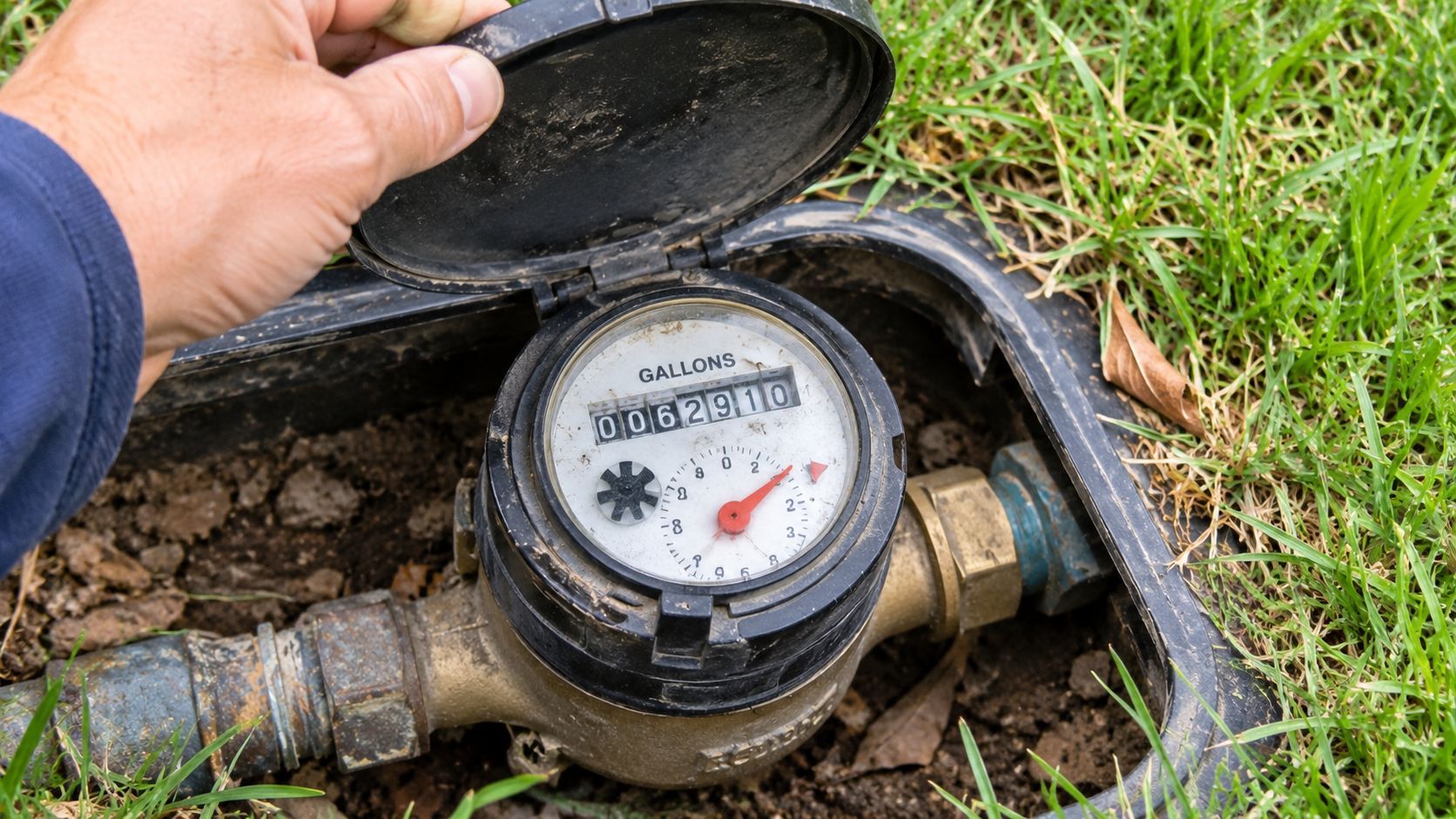
Your water meter only moves when water is flowing into your property, which makes it the most reliable leak detector you own. Denver metro utilities, including the city water departments that serve Thornton, Northglenn, Westminster, and Aurora, all describe a version of the same test.
Step 1: Stop All Water Use
Stop faucets, showers, dishwashers, and washing machines. Pause ice makers and ensure your water softener is not regenerating.
Step 2: Find The Meter
Locate your water meter near the street or utility area. Remove the lid carefully, clear debris, and read the display.
Step 3: Look At The Leak Indicator
Check the meter’s small triangle or gear-shaped indicator. If it moves while water is unused, water may be flowing.
Step 4: Wait And Compare
Check readings before and after two hours without water use. Any change suggests leakage; overnight testing provides more reliable results.
Step 5: Close The Main Shutoff
Close the home’s main valve and recheck the meter. If movement stops, the leak is inside; otherwise, investigate the buried supply line.
TIP: Take a photo of the meter face before and after the test. A phone picture removes any doubt about whether the numbers moved, and it gives a plumber or the water utility something concrete to look at.
If the Leak Is Inside: Check the Toilets First
The most common source of a silent indoor leak is a toilet, and it is also the easiest to test. A worn flapper lets water seep from the tank into the bowl all day long without a sound, and the fill valve quietly tops the tank back up. The EPA notes that an old or worn flapper can silently leak thousands of gallons a year, and recommends replacing flappers at least every five years.
Run The Dye Test
Add food coloring to the toilet tank and wait 10 minutes without flushing. Color appearing in the bowl indicates a leak.
Listen For Phantom Flushes
If your toilet refills automatically without flushing, the flapper may not be sealing properly, allowing water to escape.
Check The Overflow Tube
If tank water reaches the overflow tube’s top, the fill valve may be faulty, allowing water to run into the bowl.
Replacement flappers and fill valves are inexpensive hardware, and many homeowners handle them comfortably. If the tank is cracked or the fill valve is corroded in a way you are not sure about, it is reasonable to hand it to a plumber.
Other Indoor Suspects Worth Ten Minutes
If the toilets pass, work through the rest of the house. Each of these is a common cause of a bill that creeps up with no visible damage.
Faucets And Showerheads
Dripping faucets and showerheads waste significant water annually. Worn cartridges, washers, or seals commonly cause these persistent leaks.
Under Sink Supply Lines
Check shutoff valves, supply lines, and drains using dry paper towels. Damp cabinets, swelling, or mineral deposits indicate possible leaks.
Appliance Connections
Inspect dishwasher, washing machine, refrigerator, and humidifier connections regularly. Tiny holes in pressurized lines can leak unnoticed for weeks.
Water Heater
Inspect the pressure relief discharge pipe and tank base for moisture. Persistent dripping may indicate valve problems or thermal expansion.
Water Treatment Equipment
Check softeners and reverse osmosis systems for continuous drainage. Stuck regeneration cycles or faulty drain controls can waste water continuously.
WARNING: If you find water near electrical outlets, a breaker panel, or any appliance plug, turn off the power to that area at the breaker before touching anything, and call a licensed professional right away. Do not stand in water to work on it.
If the Leak Is Outside: Spigots, Sprinklers, and the Buried Line
When the meter keeps moving even with the main valve closed, the water is escaping between the meter and the house, or you have a problem that lives outdoors. Colorado's freeze and thaw cycles make this a regular finding.
Hose Bibs And Hoses
Look at each outdoor spigot for dripping or damp soil. Hoses left attached over a cold night can crack a spigot or split the pipe behind the wall, and the damage may only show when the hose is used again. October is a good time to disconnect hoses and insulate spigots before the first hard freeze.
Irrigation Systems
Sprinkler systems are a leading source of outdoor water loss. The EPA notes that a leak just 1/32 of an inch wide, about the thickness of a dime, can waste around 6,300 gallons a month. After a fall blowout, a zone valve that did not fully close can bleed water into the lines. Walk the yard looking for soggy patches, unusually green strips of grass, or sunken spots, especially after the system has been off.
The Service Line
The pipe between the meter and your home is your responsibility on most properties, and it runs underground. Signs of a leak here include a wet area in the yard in dry weather, a patch of grass that stays green after the rest has gone dormant, or the sound of water near the foundation. You cannot repair this yourself, and digging blindly can damage other utilities. Call for locating before any excavation.
Signs the Water Is Already Doing Damage
Sometimes the bill is the first clue and the house catches up later. Keep an eye out for these changes while you investigate.
Sound
Run quiet through the house at night. A faint hiss or the sound of water moving in a wall when nothing is on is a strong hint.
Pressure
A noticeable drop in pressure, particularly at the far end of the house, can point to a leak upstream.
Warm Spots And Damp Floors
A floor that feels warm in one area, or carpet that stays damp, can suggest a hot water line leaking under a concrete slab. That is a separate topic with its own warning signs, but it belongs on your list if you see it.
Stains And Bubbling Paint
Discoloration on ceilings, peeling paint, and baseboards that are swelling or pulling away all suggest moisture behind the surface.
Musty Odor
A stale smell in a closet, crawl space, or basement corner can come from long term dampness. Treat it as a reason to investigate, not as a diagnosis.
When to Stop Searching and Call a Plumber
The meter test and dye test are meant to give you information, not to turn you into a pipe locator. Call a professional when the meter keeps running after you have closed the main valve, when you suspect a leak in a wall, ceiling, or under the slab, when you can hear water but cannot find it, or when you have fixed the obvious suspects and the meter still moves.
Professionals have tools that homeowners do not. Acoustic listening devices pick up the sound of water escaping from a pressurized pipe, thermal imaging cameras show temperature differences behind surfaces, and pressure testing isolates which section of a line is losing water. These methods pinpoint a leak so that repairs can be targeted instead of opening up large areas of drywall or yard.
Know Your Shutoff
Make sure everyone in the house knows where the main shutoff valve is and that it turns freely. A valve that has not been exercised in years may be stuck or may not close fully. Testing it during a calm moment is much better than discovering the problem during an emergency.
Write Down What You Found
Note the meter readings, the times of your tests, which toilets passed the dye test, and any sounds you heard. That short record can save a technician time and speed up the diagnosis.
Keeping Small Leaks From Becoming Next Month's Surprise
Once you have found and fixed the leak, a few habits will help you catch the next one sooner. Check your meter's leak indicator every few months. Replace toilet flappers on a regular schedule. Run a quick dye test at the start of each season. Disconnect hoses before winter and check sprinkler zones in spring. If your usage looks unusual, test the meter right away instead of waiting for another bill.
Some homeowners also add a leak detection or flow monitoring device to the main line. The EPA's WaterSense program has published guidance on these devices, which can alert you to irregular water use or shut off the supply when flow looks wrong. They are not a substitute for maintenance, but they can shorten the time between a leak starting and you knowing about it.
Frequently Asked Questions
How can I tell if my water bill spike is a leak or just higher use?
Compare against the same month last year, then run the meter test with every fixture off. A moving meter means a leak. A still meter points to higher household use.
How long should I wait during a meter leak test?
Some utilities say 30 minutes shows movement, while the EPA suggests a two hour comparison. An overnight test catches slower leaks and removes any temptation to flush.
Can a leaking toilet really raise my bill that much?
Yes. A worn flapper can leak silently for weeks and waste thousands of gallons a year. Many homeowners never notice, but a ten minute dye test confirms it for certain.
What if the meter stops when I close the main valve?
The leak is inside the house. Check toilets, faucets, appliance lines, the water heater, and treatment equipment. If you cannot find it, a plumber can locate it without opening walls blindly.
What if the meter keeps running with the main valve closed?
The leak is on the buried line between the meter and the house. Do not dig for it. Call a plumber to locate and repair it, and notify your utility.
Can a water softener or reverse osmosis system cause a high water bill?
Yes. A softener stuck regenerating or an RO drain line that never shuts off can send water down the drain constantly. Have the system inspected if you hear running water.
Tracking Down Hidden Leaks Before They Grow
A surprising water bill is really a message that water is leaving your system somewhere you cannot see. The meter test is the place to start, since a dial that moves while every fixture is off confirms a leak. Closing the main valve then separates indoor causes from the buried line outside. Toilets, appliance connections, softeners, spigots, and sprinkler zones account for most of what turns up, and a few drops of food coloring can settle the toilet question in ten minutes.
When the meter keeps running after you have done your own checks, a trained eye saves a great deal of guesswork. Drip Fix Plumbing
has served homeowners in Thornton, CO for 15
years, and the experience has shown that
small leaks found early cost far less than those left running through another billing cycle. Keeping notes on your meter readings, replacing worn parts on a schedule, and knowing where your main shutoff sits make the next surprise easier to catch. A quiet house and a steady bill are well within reach.